
A musical director on tour owns the music on stage: the arrangements, the band, the transitions, the click and playback, and the call when something goes wrong in front of a full arena. My friend and collaborator Steven Doar, part of our IDA team, does this job for Hans Zimmer Live, turning studio scores into a show that works every night.
Artists ask me about this role more often now because the gap between a record and a live show keeps getting wider. Records are built in layers, edited and perfected. A show has to be played, start to finish, by people, in a room that changes every night. The musical director is the person who closes that gap. Understanding the role is part of artist development, even for artists who are years away from an arena.
What a musical director actually owns
The title sounds ceremonial. The job is not. On a serious tour the musical director is responsible for:
- Arrangements. Deciding what the band plays live, what is triggered, and what is cut, so the song keeps its identity without depending on forty studio tracks.
- The band. Hiring or recommending players, running rehearsals, and holding everyone to the same standard on night one and night ninety.
- The show flow. Song order, segues, keys, tempos, count-ins, and the moments where the music has to wait for lights, video or the artist.
- Click and playback. The timing system that keeps musicians, tracks, lighting and video locked together.
- Problem solving in real time. A dropped in-ear, a missed cue, a guest who walks on late. The musical director makes the call and the audience never knows.
The artist sets the vision. The musical director makes it repeatable.
From studio score to arena show
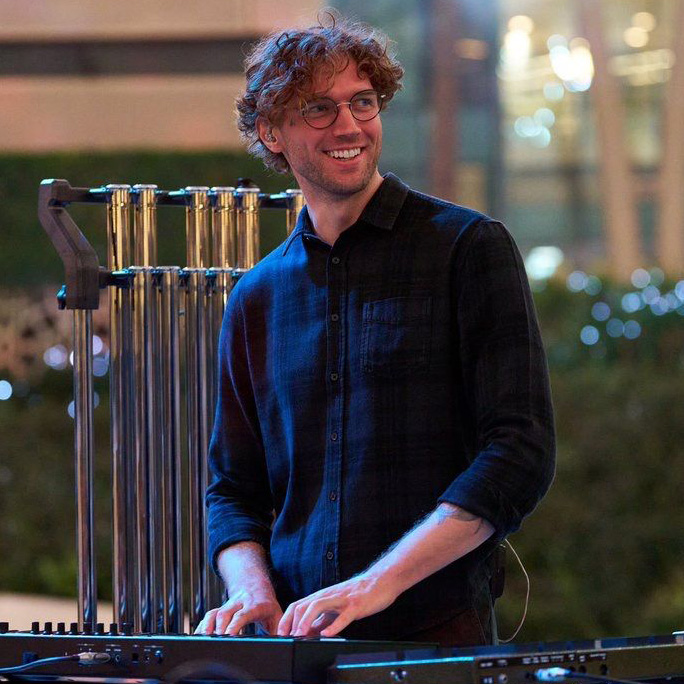
Film music is one of the hardest things to put on a stage. A score is written to picture, recorded with large ensembles, layered, and mixed for a theater. Steven works on both sides of that line. He co-composed the score for Twilight of the Gods with Hans Zimmer and Omer Benyamin, contributed to Dune, No Time to Die and other major projects, and serves as Musical Director for Hans Zimmer Live, working with Zimmer and composer Nick Glennie-Smith. On his own site he describes his work as divided between the studio, composing scores and producing songs, and the stage, where he acts as a musical director for live tours. The current run, Hans Zimmer Live: The Next Level, is an arena tour across Europe in 2025 and 2026.
That combination is the point. A musical director who has written and recorded the music knows which parts carry the emotion and which are support. That knowledge decides what a band of real players can deliver live and what has to be rebuilt for the room.
The drumming world noticed. In the 2024 Modern Drummer Readers Poll, Hans Zimmer’s percussion section won for Best Recorded Performance and Best Percussionist, and Steven received special recognition for his work on Dune Part One, Dune Part Two and Twilight of the Gods, and as Musical Director for Hans Zimmer Live. His words in that piece: “I grew up reading Modern Drummer Magazine, I think it’s absolutely insane that I’m even a part of this, and it’s been a real pleasure.” As the owner of Modern Drummer, I can tell you that line meant a lot to our readers.
What artists can take from the musical director’s job
Most developing artists will not hire a musical director this year. Every one of them can think like one. When I work with artists at IDA, these are the habits that separate a set that grows a fan base from a set that just fills time:
- Know which parts of each song are the song. If the hook lives in a synth line, decide who plays it live or how it is triggered before rehearsal, not at soundcheck.
- Build the show, not a list of songs. Keys, tempos and transitions matter. Dead air between songs costs more attention than a weak song.
- Make it repeatable. A great show once is luck. A great show every night is a system: charts, click, cues and a rehearsal plan.
- Hire for the standard you want. The players around you set your ceiling on stage. So does the person running them.
This is the same thinking I learned in studios and on tours with Aerosmith: the technology serves the performance, and the performance has to hold up when the room is full.
When an artist needs a musical director
The signs are practical. You need one when your band is more than three or four people, when your show uses playback or click, when you are moving from clubs to theaters or festivals, or when you are spending rehearsal time arguing about arrangements instead of playing them. Many artists also bring one in before a showcase or a tour where label, agent or promoter attention is on the line, because that is exactly when a show cannot fall apart.
A good musical director pays for themselves in fewer rehearsals, fewer mistakes and a set that people talk about. The live rig matters too. If drums and hybrid electronics are part of your show, my piece on how pros build a hybrid drum kit covers how touring players make acoustic drums and triggers work together every night.
FAQ
What does a musical director do on tour?
A musical director on tour runs the music: arrangements, band rehearsals, song flow, click and playback, and real-time decisions during the show. The artist sets the vision and the musical director makes the show repeatable night after night.
Who is the musical director for Hans Zimmer Live?
Steven Doar serves as Musical Director for Hans Zimmer Live, working with Hans Zimmer and composer Nick Glennie-Smith. He co-composed Twilight of the Gods with Zimmer and Omer Benyamin and is part of the IDA team.
Is a musical director the same as a bandleader?
They overlap. A bandleader leads the players on stage. A musical director also owns arrangements, show structure, playback and the technical timing system, and often hires and rehearses the band.
When should a developing artist hire a musical director?
Usually when the band grows past three or four players, when the show uses playback or click, or before a showcase or tour where industry attention is on the line.
If you are building a live show and want it to hold up in front of the people who matter, book an artist strategy session with our IDA team.
More from David Frangioni: How Pros Build a Hybrid Drum Kit: A Checklist for Stage and Studio, the live rig side of a touring show.
David Frangioni
Join The Signal Chain
My weekly letter on how music is played, captured, mixed, heard and preserved.
One letter a week from David Frangioni. Unsubscribe anytime.
Welcome to The Signal Chain.
Thank you for signing up. You are now part of my community of artists, drummers, engineers and music lovers who care about how great music is made, heard and preserved.
My next letter comes straight to your inbox. If you do not see it, check your promotions or spam folder and mark it as safe.
David Frangioni

